





Beyond the Lobby: Why Mail and Parcel Systems Are Critical to Building Safety
When building safety is discussed, attention naturally focuses on elements such as fire doors, alarms, and structural integrity. Yet one critical component is still routinely overlooked: mail and parcel systems.
Often treated as a late‑stage fit‑out detail, mail areas are frequently designed and installed without adequate consideration of their impact on fire strategy, security, and regulatory compliance. This oversight can introduce significant risks into an otherwise compliant building.
It is time for a shift in perspective. Mail and parcel systems are not simply conveniences for residents—they are part of a building’s safety infrastructure.

Why Mail Systems Still Get Overlooked
Despite increasing regulation and heightened scrutiny across the built environment, mail systems continue to fall into a grey area of responsibility. They sit at the intersection of architecture, fire engineering, security, and interior fit out—often meaning no single discipline takes ownership early enough.
As a result, these systems are frequently:
– Specified late in the design process
– Installed without appropriate certification
– Introduced into fire rated walls or escape routes with insufficient oversight
The issue is rarely a lack of intent. Instead, it is a lack of early technical engagement and an underestimation of the role these systems play in maintaining building safety and compliance.
The Hidden Risks in Mail Areas
Poorly planned mailrooms and mailbox banks can quickly become weak points in a building’s safety strategy.
Even where robust fire measures are in place, risks arise when mail systems are installed incorrectly. For example, fitting non‑certified mailboxes through fire‑rated walls or within protected corridors can compromise compartmentation—one of the core principles of fire safety.
Beyond fire risk, there are also serious security implications. Unsecured or poorly monitored mail areas can result in:

Theft and vandalism

Unauthorised access to shared spaces
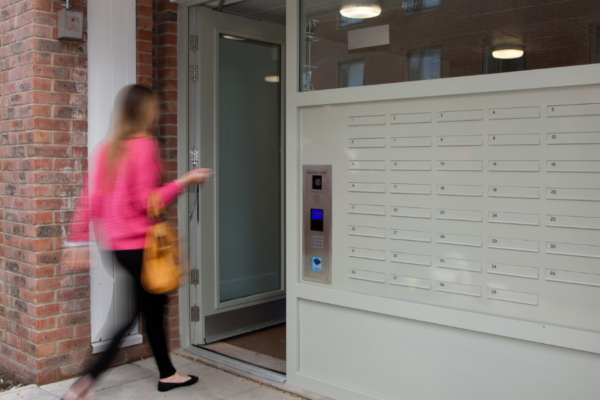
Increased vulnerability for residents
In short, the way mail and parcels are handled has a direct and material impact on both occupant safety and regulatory compliance.
What Makes a Mail System Safe?
An effective mail and parcel system must support a building’s fire strategy while also delivering robust security. These two requirements cannot be treated separately.
1. Security
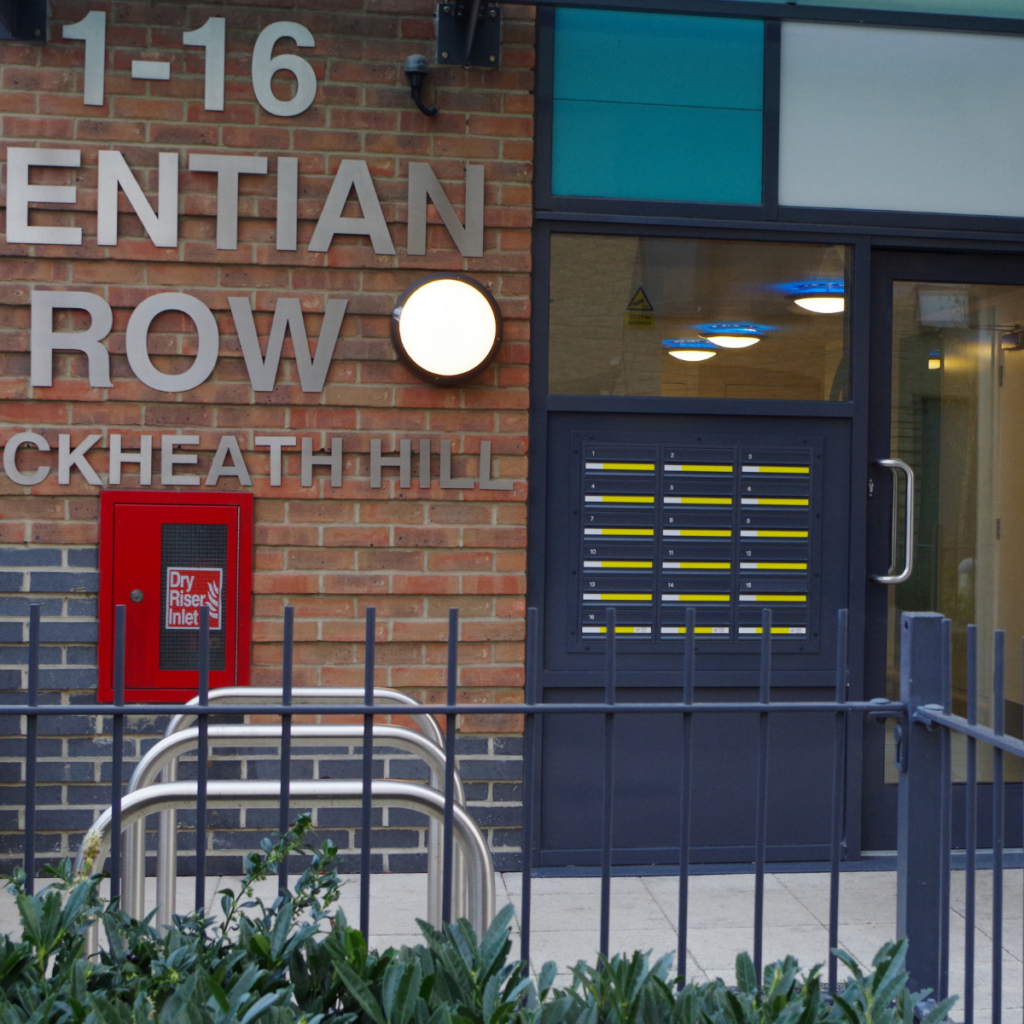
A compliant system should:
– Prevent unauthorised access
– Protect individual residents’ mail and deliveries
– Be robust enough to resist tampering or forced entry
Security failures are not isolated incidents; they undermine trust in shared spaces and expose wider vulnerabilities within a building.

2. Fire Compliance
Equally critical is ensuring mail systems do not weaken the building’s fire performance. This requires:
– The use of certified, fire rated products
– Correct installation within fire rated walls
-Preservation of compartmentation integrity
When properly specified and installed, fire rated mail systems can actively support fire containment by maintaining insulation and structural integrity during a fire.
Mail Systems and the Compliance Landscape
Under today’s building safety regime, every component of a building must actively support life safety, fire performance, and accountability. The Building Safety Act 2022 reinforces this requirement, placing a legal duty on duty‑holders and accountable persons to manage building risks throughout the lifecycle of higher‑risk residential buildings—not just at handover.
Mail and parcel systems fall squarely within this scope. As permanent fixtures installed within internal walls, lobbies, and circulation routes, they form part of the building’s internal envelope and must therefore align with the building’s approved fire strategy.
Equally, the Fire Safety Act 2022 clarifies that fire risk assessments must include anything attached to or forming part of a building’s structure—including walls, doors, and fittings. A mail system introduced into a fire‑rated wall or protected corridor is not a neutral addition; it is a penetration that must be properly assessed, tested, and documented.
From a technical standpoint, compliance depends on proven fire performance. Mail and parcel systems installed within fire‑resisting constructions should be supported by appropriate testing to recognised standards such as:
– BS EN 1363‑1:2012 – general principles for fire resistance testing
– BS 476: Part 22 – fire resistance of non‑loadbearing elements
– BS 476‑20:1987 – methods for determining fire resistance
– BS 476: Parts 6 and 7 – surface spread of flame and fire propagation
Where a 2‑hour fire rating is required—as is increasingly common in high‑risk residential buildings—systems must demonstrate that they can maintain integrity and insulation for the full duration, in line with industry‑accepted fire strategies. Anything less introduces uncertainty into compartmentation, evacuation modelling, and regulatory sign‑off.
In short, an incorrectly specified or uncertified mail system is not simply a design flaw—it is a compliance failure that can invalidate fire strategies, delay approvals, and expose duty‑holders to enforcement action.
When Things Go Wrong: A Real‑World Example
Consider a residential development where untested mailboxes were installed within the main lobby.
Although the wider building complied with its fire strategy on paper, the mailboxes had been fitted through a fire‑rated wall without evidence of testing to standards such as BS EN 1363‑1 and BS 476‑22, and without documented confirmation that compartmentation had been preserved.
This single oversight led to:
– Compromised compartmentation
– Failure under the fire risk assessment required by the Fire Safety Act
– Rejection during compliance checks
– Full removal and replacement of the system
– Weeks of delay to occupancy
Under the accountability framework introduced by the Building Safety Act 2022, accountability for such failures is no longer ambiguous. This scenario highlights why mail systems must be addressed early, specified correctly, and fully documented—not retrospectively justified once issues are uncovered.
From Afterthought to Essential Infrastructure
Mail and parcel systems should no longer be treated as optional extras or purely aesthetic features. They must be considered with the same rigour as other safety‑critical elements.
When properly integrated, they:
– Support secure, controlled access for residents
– Maintain fire compartmentation
– Align with evacuation and fire strategies
– Contribute to long‑term compliance and risk management
These outcomes are only achievable when mail systems are addressed early in the design process—rather than being retrofitted once other decisions have already been made.
The Future of Mail and Parcel Systems
As buildings become more complex and regulatory expectations continue to rise, mail and parcel systems will increasingly be recognised as safety‑critical infrastructure.
We expect to see:
– Greater scrutiny of certification and testing
– Clearer guidance on fire‑rated penetrations
– Increased integration between mail systems, access control, and fire strategy
The industry is moving away from reactive fixes and towards proactive, safety‑led design—and mail systems must be part of that shift.
Treat Mail Systems as Safety‑Critical Infrastructure
The message is clear. Mail and parcel systems are no longer peripheral fit‑out items—they are safety‑critical components that directly affect fire performance, security, and compliance.
In an era shaped by the Building Safety Act 2022, the Fire Safety Act, and heightened scrutiny of fire‑rated penetrations, overlooking these systems is no longer defensible. The cost of getting it wrong is measured not just in delays and redesigns, but in risk to life, legal exposure, and reputational damage.
Developers, designers, fire engineers, and accountable persons must act now:
If a system penetrates a fire‑rated wall, it must prove—without ambiguity—that it can maintain integrity and insulation for the required duration.
The buildings that stand up to future scrutiny will be those designed with safety at their core from day one. Mail and parcel systems are part of that equation.
The question is no longer whether they matter— it is whether your building can afford to ignore them.